
Pre-presses and curd distributor
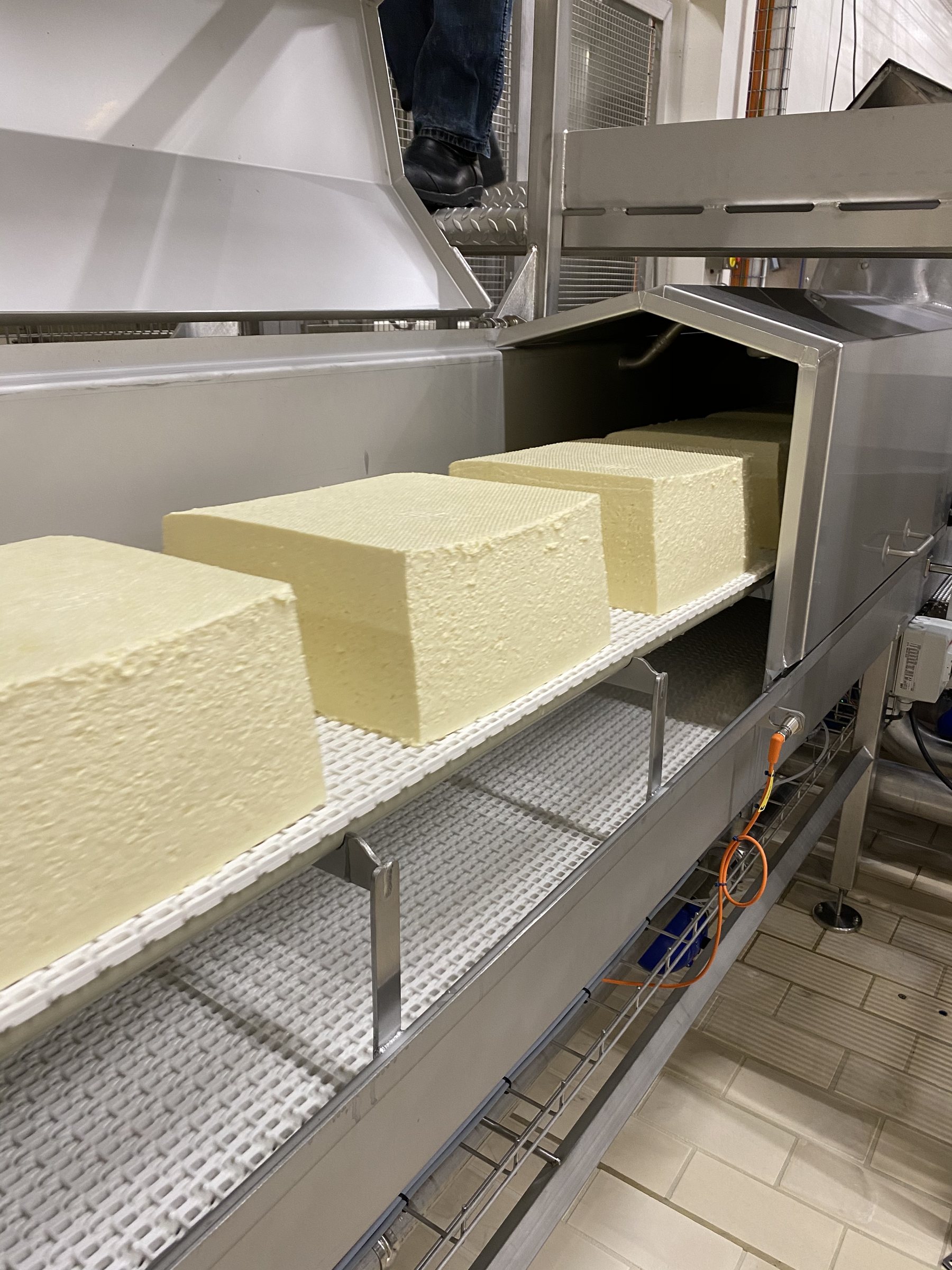
For semi-hard cheeses such as Danbo, curd and whey are distributed uniformly in the pre-pressing vat by a curd distributor. After pressing, the curd mass is cut into portions and transferred to molds.
Call us: HSV Combi +45 42 75 53 54
Solutions
Custom-designed solutions for the cheese industry
From the first process idea to a plant in stable operation – developed around your product and your production.
All solutionsEquipment
Equipment for every step in cheese production
Find the equipment by the process step you are working on – or explore the whole cheese plant.
Explore the interactive cheese plantFrom curd to mold
Press systems developed according to cheese type, mold, pressing time, capacity and desired degree of automation.
In brief – for those making the investment decision
Potential operational effect
Potential for more uniform shape, texture and weight – and a press cycle rate that matches the rest of the line.
Basis for calculation
Risk and other value
Pressing is sized for the cheese type and the line's total capacity, which reduces the risk of creating a new bottleneck.
The expected effect is calculated from your baseline and depends on product, process, capacity and operation.
Equipment
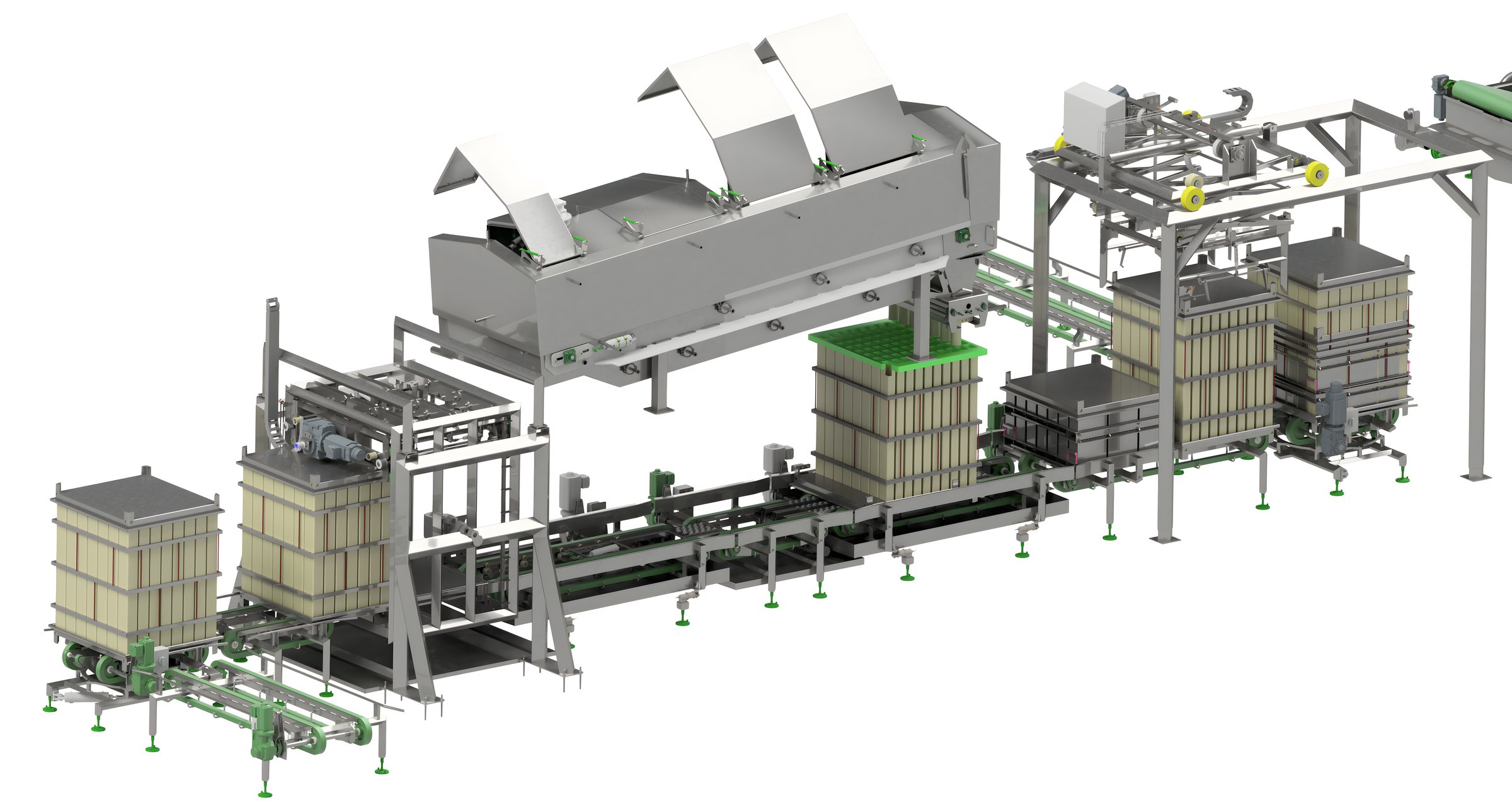
Each element is sized for the step before and after, so curd mass and molds move in step with the rest of the line.
For semi-hard cheeses such as Danbo, curd and whey are distributed uniformly in the pre-pressing vat by a curd distributor. After pressing, the curd mass is cut into portions and transferred to molds.
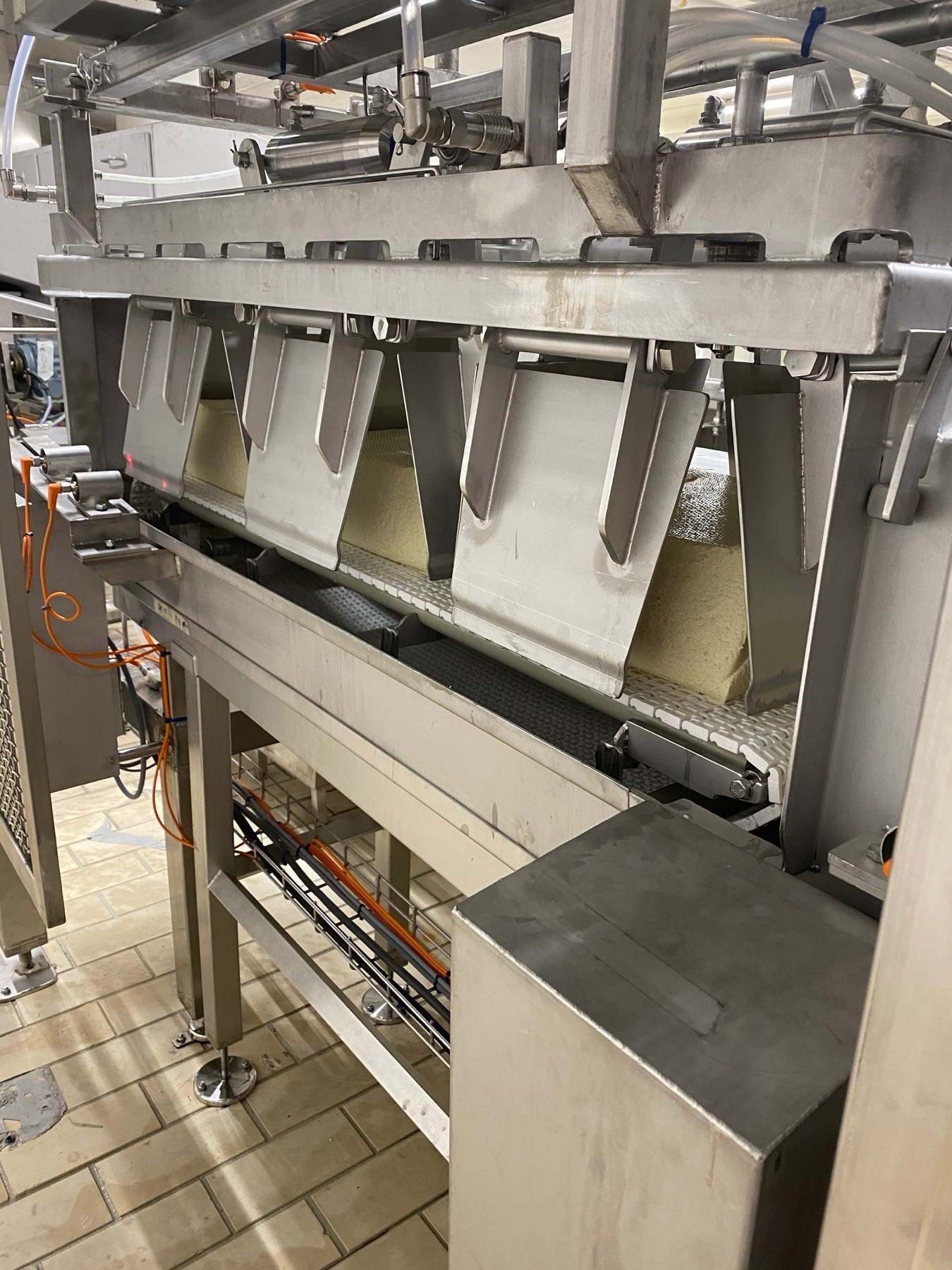
For Havarti and similar cheeses, the curd is drained before it is distributed into the molds. The separation is adapted to product, capacity and desired residual whey.
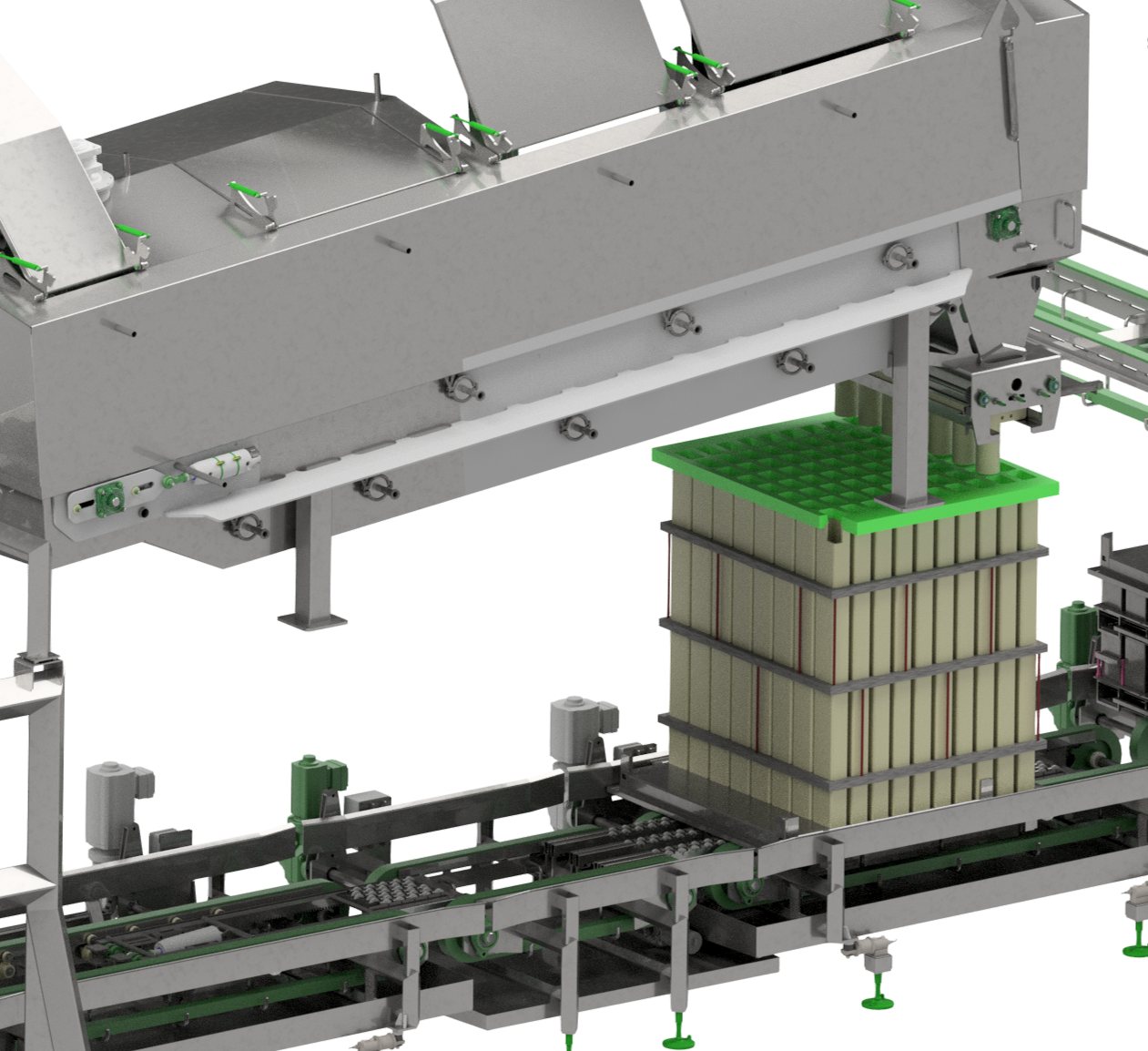
The drained curd is distributed through filling matrices. The matrices have a direct influence on the distribution in the mold – and thus on the weight.
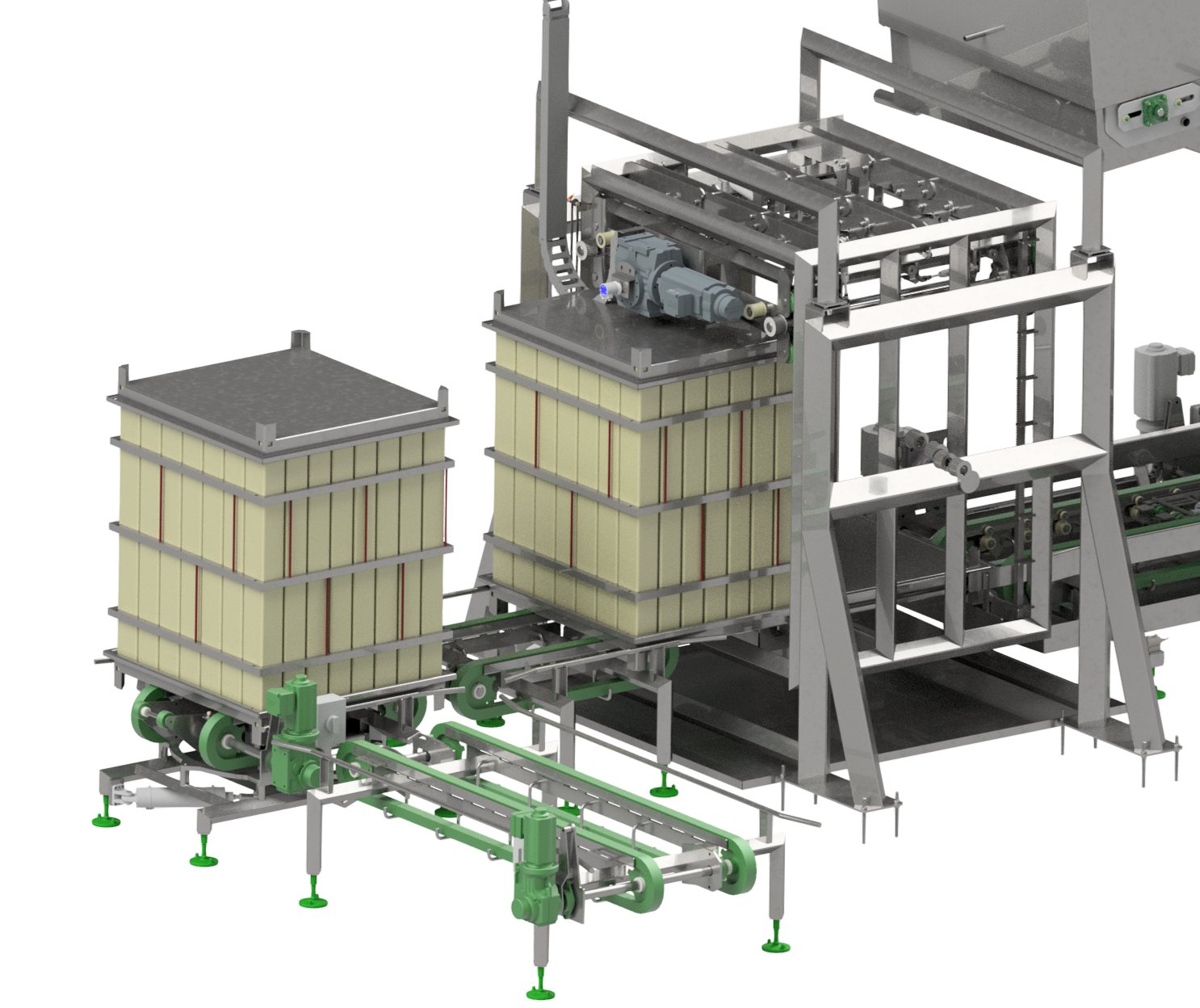
The molds can be self-pressed in tubes and turned in a controlled sequence, giving the cheeses the desired texture and shape.
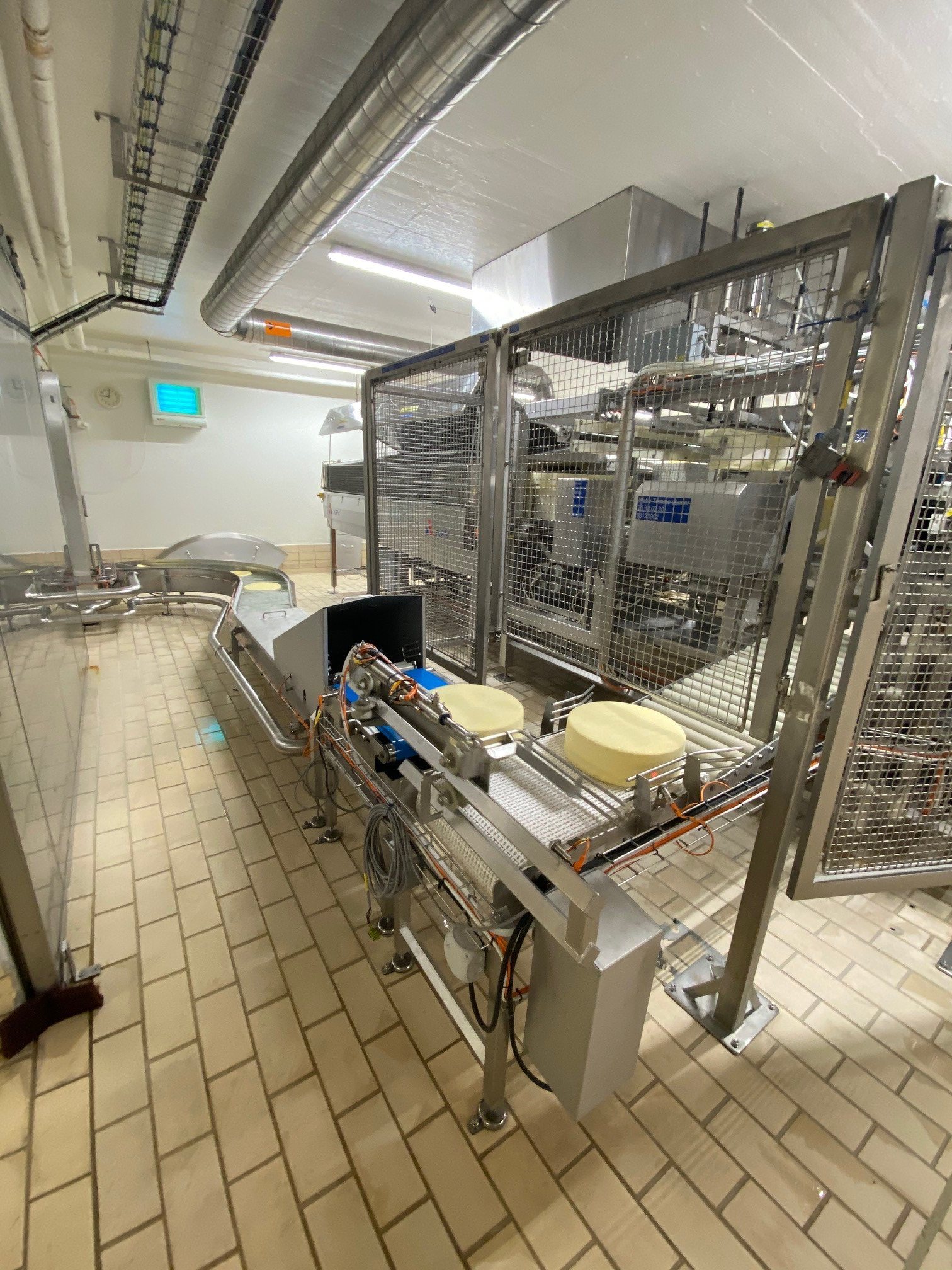
Molds are received, positioned, pressed and discharged in step with the rest of the line. Pressure, time, number of press positions and buffers are sized based on actual production.
Technical key
The cheese type determines whether the curd mass is pressed together under whey or drained first and self-pressed in the mold.
Semi-hard cheeses · e.g. Danbo
Havarti and similar cheeses
Design parameters
Press systems are custom-designed, so we do not publish fixed specifications. These are the parameters we size for together with you.
Weight accuracy
Product distribution, whey content, height, cutting and matrices have a direct influence on the weight. It is a central design and control point.
Talk pressing over with us
Tell us about your cheese type, format, capacity and current plant. We will then clarify which pressing method and which equipment fit.
Contact