
When the molds travel through the plant
Efficient handling of cheese molds throughout production
Manual and automated solutions for conveying, filling, stacking, storing, turning and emptying cheese molds.
In brief – for those making the investment decision
Potential operational effect
Less need for manual handling and a more stable cycle rate.
Basis for calculation
- Molds or racks per hour
- Conveying distances
- Staffing
- Cycle times
- Buffers
Risk and other value
Better ergonomics, fewer heavy lifts and the potential for more consistent internal logistics.
The expected effect is calculated from your baseline and depends on product, process, capacity and operation.
All the way around
The complete mold circuit
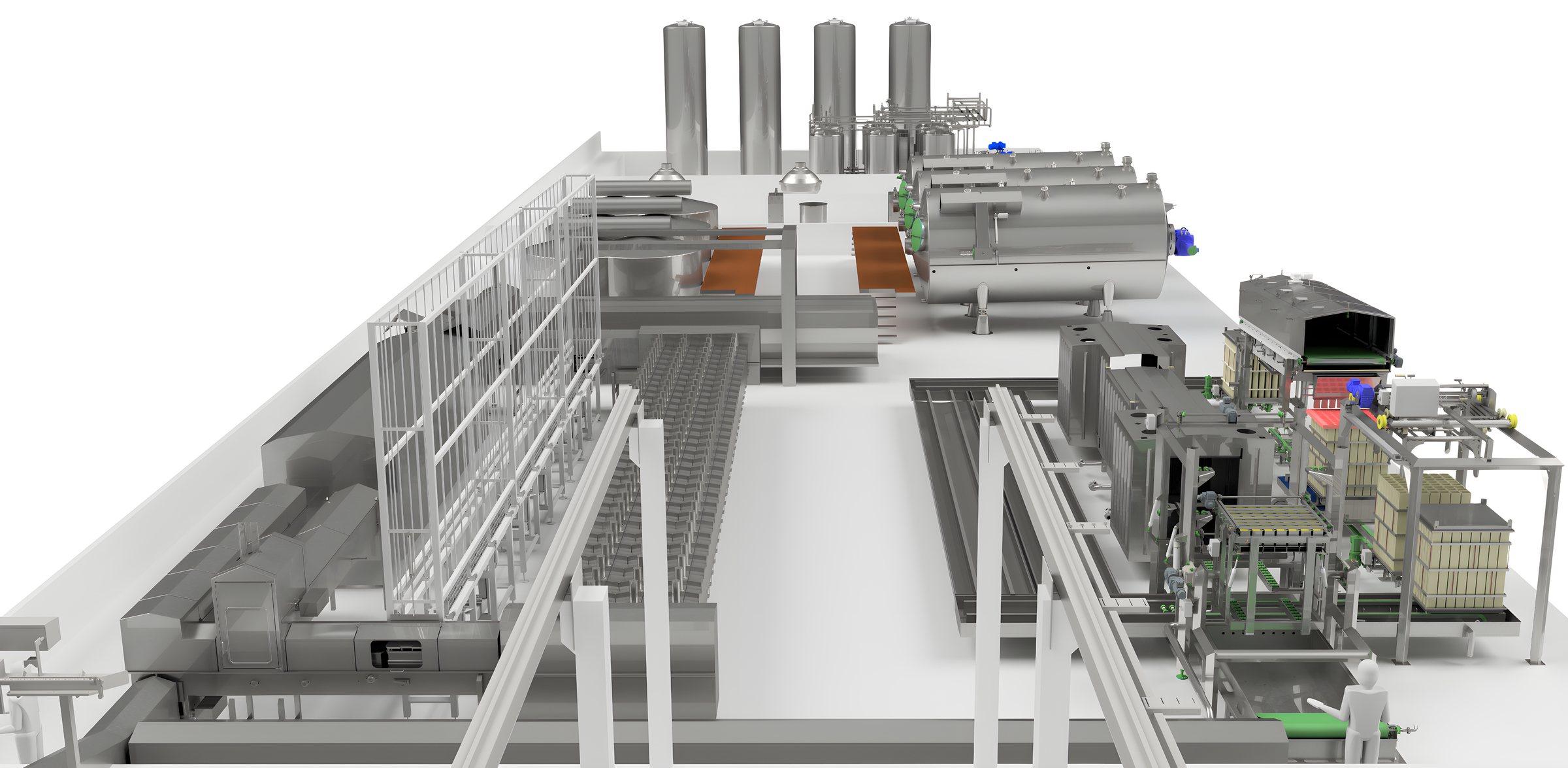
Molds move through filling, pressing, emptying, washing, storage and return. We look at the entire circuit so that buffers, capacity, cleaning and automation fit together.
- FillingThe molds are filled with curd mass or drained curd grains.
- PressingThe molds are pressed or self-pressed and turned.
- EmptyingThe cheeses are removed and the lids are handled.
- WashingMolds, lids and block molds are cleaned.
- StorageMold hotels and buffers keep the molds ready.
- ReturnThe molds are returned to filling.
Equipment
Seven building blocks in mold handling
The elements are combined according to mold type, capacity and the degree of automation you want.
Manual or automatic
Automation where it makes sense
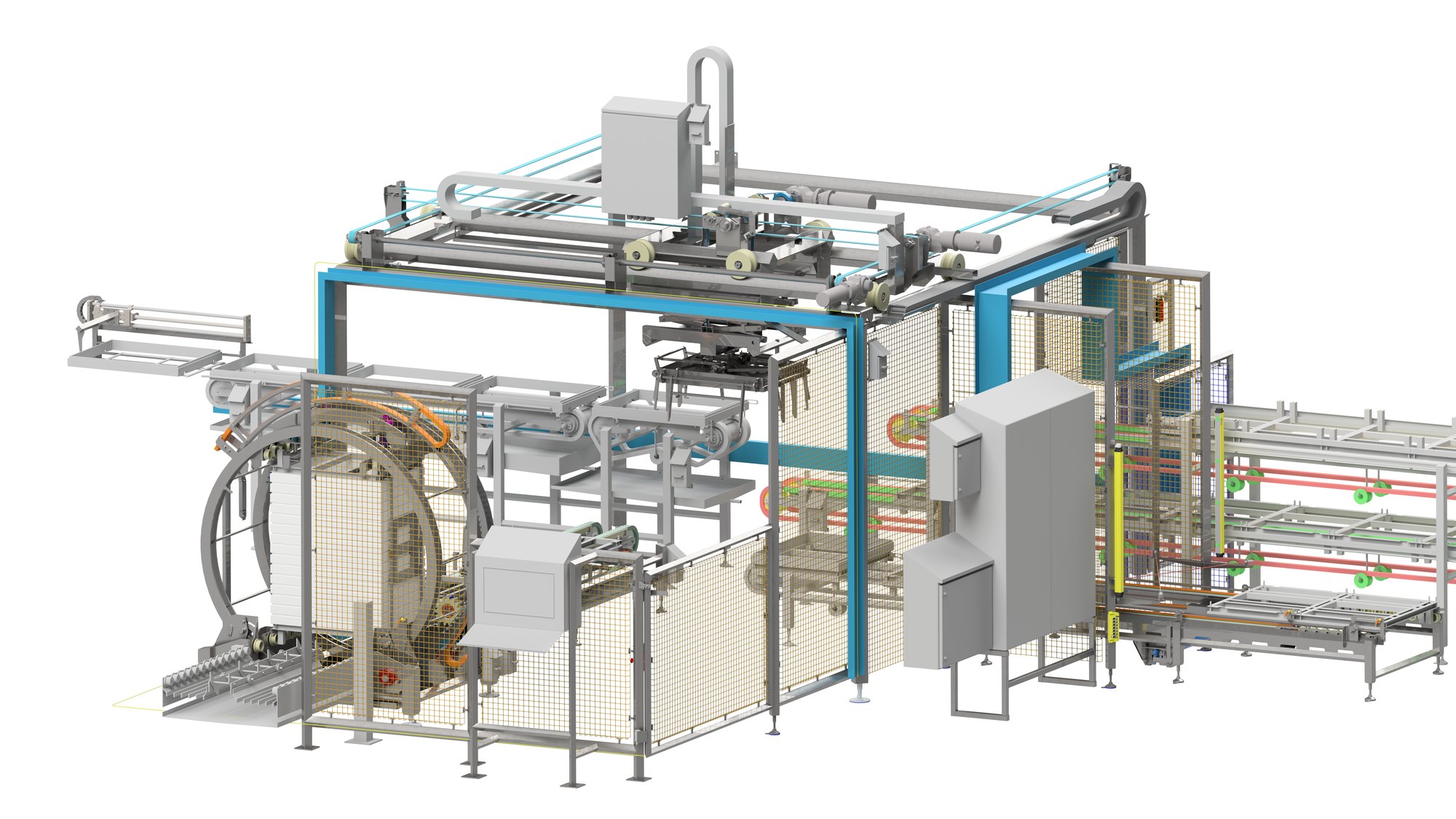
Mold handling can be built fully manual, partially automated or as a continuous automatic circuit. The choice depends on capacity, staffing and the plant the equipment is going into.
- XY and XYZ gantry systems with custom tooling for the specific mold
- Robotic handling where it is the right technology
- Buffers and mold hotels so the line keeps running during short stops
Design parameters
What we adapt – not a standard datasheet
Mold handling is built for your molds and your building, so we do not show fixed specifications. These are the parameters we size for together with you.
The circuit before the machine
We start by mapping the molds' route through production. Only then is each machine defined, so that buffers, capacity, cleaning and automation fit together.
- Mold type and format
- Molds, lids and block molds determine tooling, grippers and conveyors.
- Capacity
- Molds per hour through the entire circuit – not just in the individual step.
- Buffers and mold hotel
- Buffer size and storage so the steps can run at different cycle rates.
- Degree of automation
- From manual handling to XY/XYZ gantry systems and robotic handling.
- Cleaning
- Washing of molds, lids and block molds is designed in as part of the circuit.
- Integration
- Adaptation to existing pressing, washing, building and control systems.
Show us your molds
How do your molds move today?
Tell us about mold type, quantity and your current handling. Then we look at the circuit and suggest where automation can pay off.